
Hair Fibers for Thinning Hair: A Complete Guide to Conditions, Application, and Color Matching
Thinning hair can impact more than just your reflection. It affects your confidence, your social presence, and how you feel in your own skin. While medical treatments like minoxidil and finasteride take months to show visible results, hair fibers deliver a cosmetic solution in 30 seconds — transforming sparse areas into a full, natural-looking head of hair without surgery, prescriptions, or commitment.
What are hair fibers? Hair fibers (also called hair building fibers or hair thickening fibers) are tiny, colored microfibers — typically made from keratin protein or natural cotton — that cling to existing hair strands through static electricity. When sprinkled or sprayed onto thinning areas of the scalp, they bond to existing hairs and create the visual appearance of fuller, denser hair within seconds. They wash out completely with regular shampoo and are designed as a cosmetic concealer, not a hair-loss treatment.
In this guide, we explore which thinning conditions hair fibers help most, how to apply them, how to choose the right color, and how Finally Hair Building Fibers compare to brand-name competitors.
Are Hair Fibers Right for You?
Hair fibers work best for men and women with:
- Diffuse thinning anywhere on the scalp where some hair remains
- Widening parts or thinning crown
- Receding hairlines with remaining hair to bond to
- Small to medium bald patches with surrounding hair
- Visible scalp showing through styled hair (updos, ponytails, buns)
- Scarring from previous procedures or accidents
- Fine hair that lacks natural density
They don’t work on completely smooth bald areas larger than about a quarter, since the fibers need existing hair to bond to electrostatically. People with very advanced hair loss or fully shaved heads are not good candidates and may be better served by other cosmetic options or by speaking with a dermatologist about medical or surgical treatments.
10 Hair Loss Conditions Hair Fibers Help
Hair fibers are useful for a wide range of thinning conditions — from common pattern baldness to medication side effects to recovery after a transplant. Here’s how they help in each.
1. Androgenetic Alopecia (Male and Female Pattern Baldness)
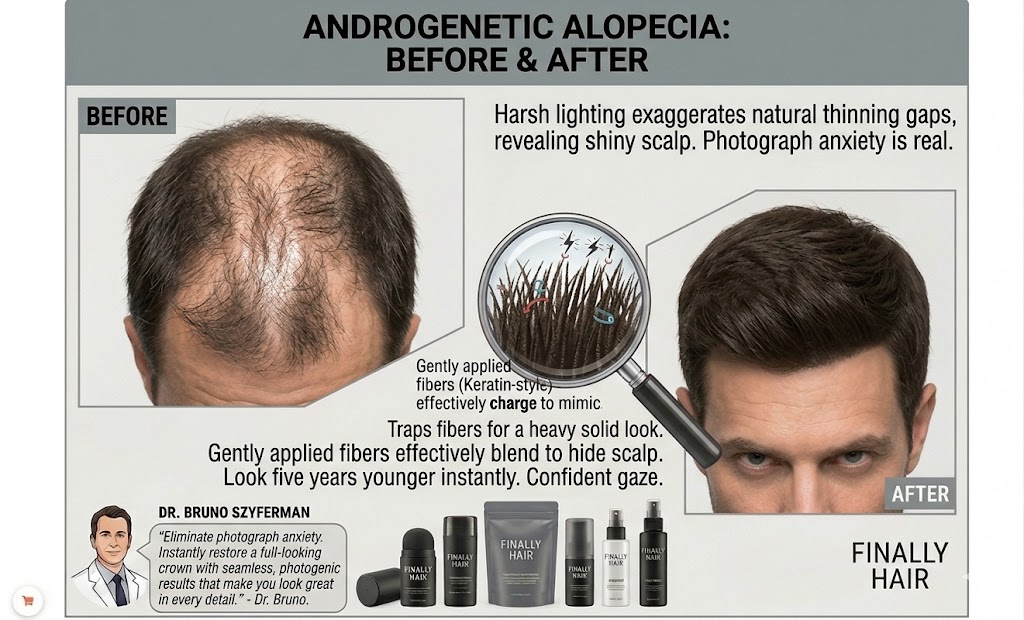
The most common cause of hair loss worldwide. Fibers cling to existing strands to mask the widening part, the visible scalp at the crown, and the shiny reflection under bright light. Particularly effective in early-to-mid stage pattern thinning before the scalp goes fully smooth.
2. Alopecia Areata (Patchy Hair Loss)
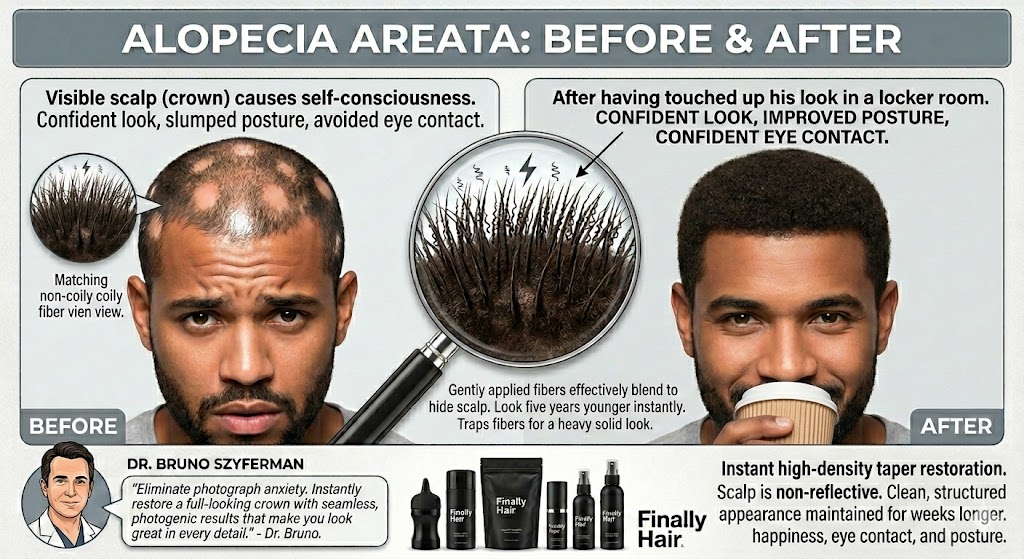
For people with autoimmune-driven patchy hair loss, fibers effectively fill in small-to-medium circular bald spots by bonding to surrounding hair. Best results when the surrounding hair density is intact. For larger patches, layering with a dab-on concealer provides better coverage.
3. Post-Hair Transplant Recovery
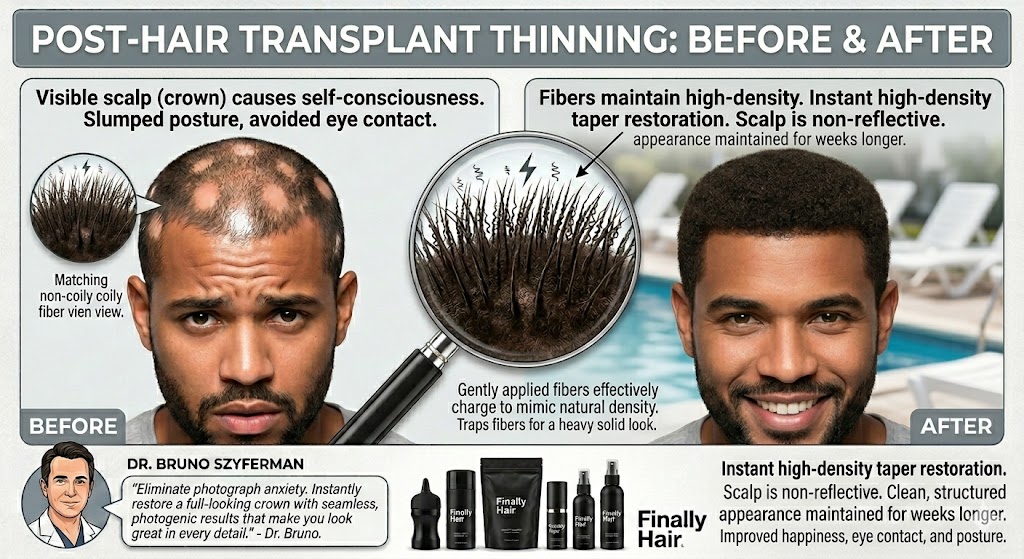
Hair transplants take 6-12 months to show full results. During the “dormant phase” after surgery, the transplanted grafts shed before new growth emerges. Fibers provide essential bridge density during this waiting period, so patients don’t have to walk around with visible thinning while their investment matures. Do not apply directly over fresh surgical sites — wait until your surgeon clears you (typically 2-4 weeks post-procedure).
4. Telogen Effluvium (Stress-Induced Shedding)
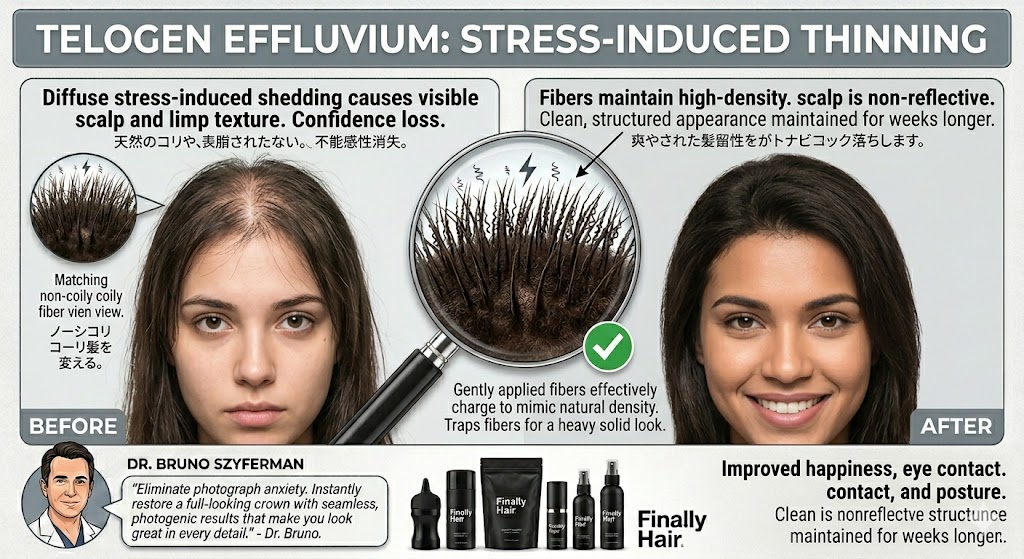
Major stress events, illness, surgery, or rapid weight loss can push large portions of your hair into the shedding phase 3-4 months later. Telogen effluvium is usually temporary (6-12 months), and fibers provide the volume needed to hide diffuse thinning while your hair cycles back to normal.
5. Traction Alopecia (From Tight Hairstyles)
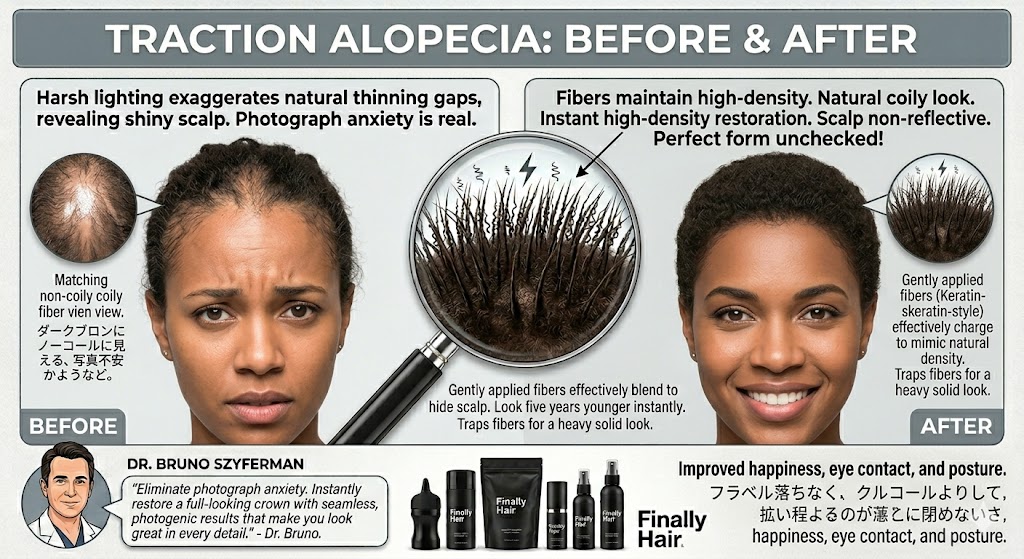
Caused by years of tight ponytails, braids, weaves, or extensions, traction alopecia typically shows as thinning at the temples and hairline. Fibers can soften the appearance of a receding hairline or thin temples. Long-term, the most important step is to stop the tension causing the loss — fibers are cosmetic management, not a cure.
6. Trichotillomania (Hair-Pulling Disorder)
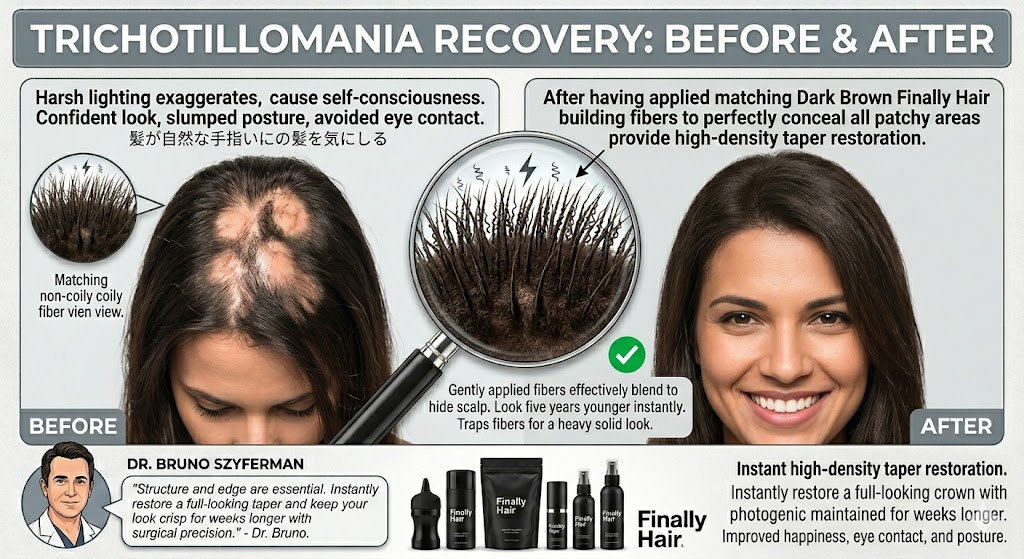
For people in recovery from a hair-pulling disorder, fibers conceal patchy areas during the regrowth phase, reducing the visual reminder that can sometimes trigger pulling. Coverage during this period can support the overall recovery process by removing one stress trigger.
7. Postpartum Hair Loss
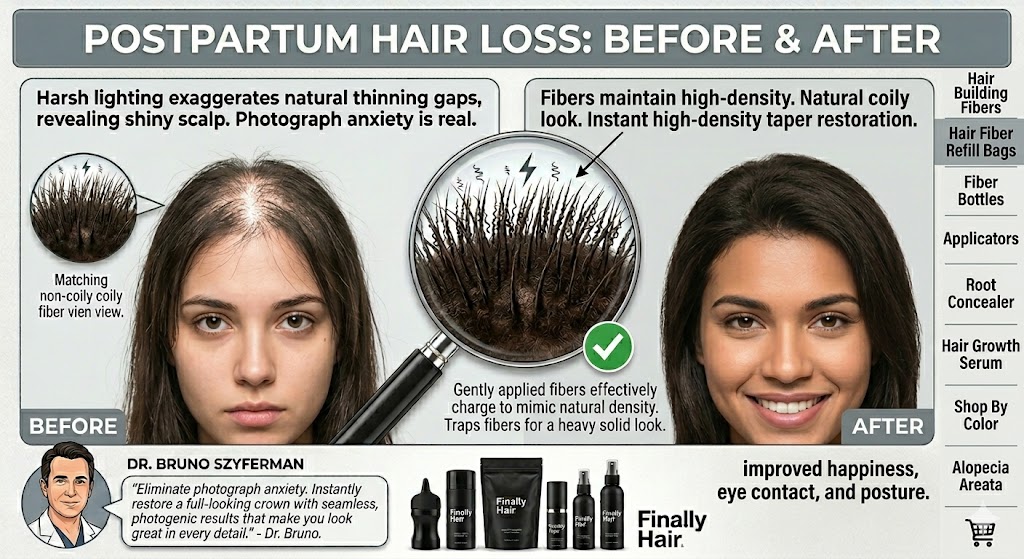
Hormonal shifts 2-4 months after pregnancy commonly cause significant temporary shedding — sometimes losing 30-50% of pre-pregnancy density. Fibers easily mask this thinning while hormones rebalance. Most women see their hair return to normal density between 6 and 12 months postpartum.
8. Scalp Scars and Surgical Marks
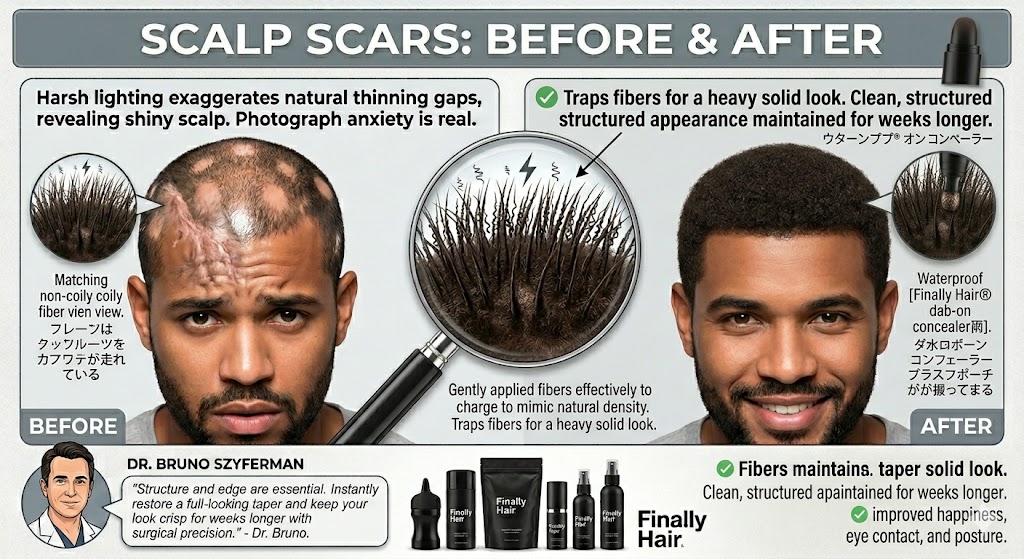
Fibers camouflage scars from accidents, FUE or FUT hair transplant donor sites, and other surgical procedures. Smooth scar tissue doesn’t hold fibers well on its own, so combine with a dab-on concealer first — apply the concealer to provide grip, then layer the fibers on top.
9. Medication-Induced Thinning
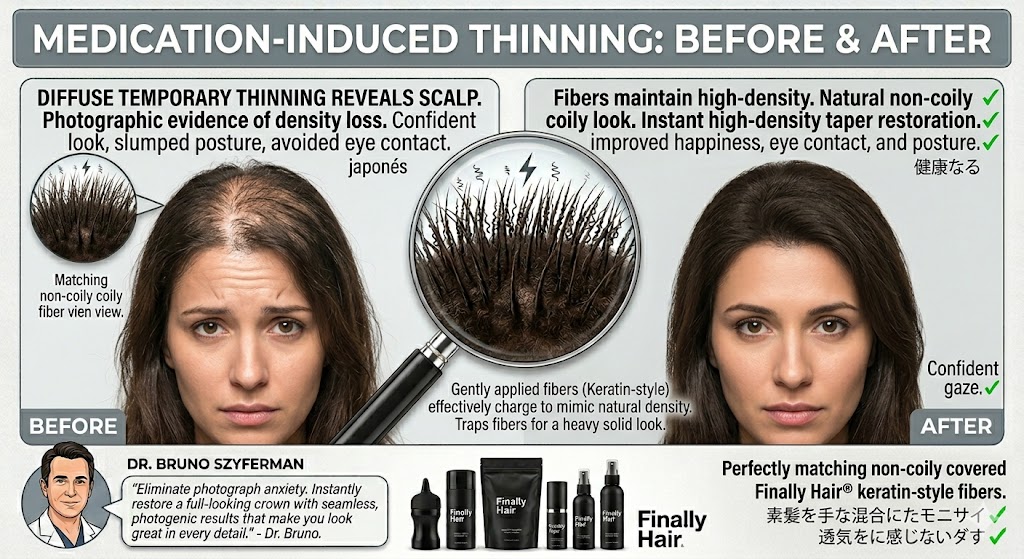
Many medications cause hair thinning as a side effect: blood thinners, antidepressants, blood pressure medications, hormonal birth control, thyroid medications, and chemotherapy among others. Fibers provide a non-chemical, topical way to maintain your appearance during treatment without adding any medication to the picture.
10. Widening Part Lines
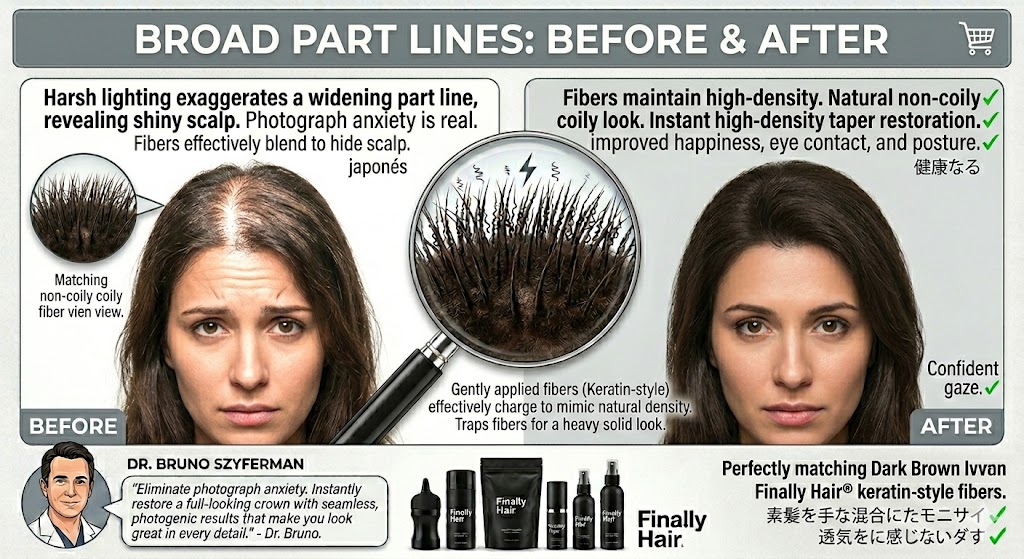
One of the earliest and most noticeable signs of female pattern thinning is the part line widening over time. Fibers narrow the visible part by adding density along both sides of the parting, giving the illusion of thick, natural growth. Apply along the part, not directly on the scalp, for the most natural look.
How Application Method Affects Results
The way you apply hair fibers matters as much as which fibers you use. Three tools improve results dramatically:
- For the hairline: Use a Surgical Hairline Optimizer to create an irregular, natural-looking edge. A straight, sharp hairline looks artificial; an irregular edge mimics real hair growth.
- For targeted density: Use an Atomizer Spray Pump for precision misting rather than shaking. This works especially well for hairlines, temples, and small patches where shaker bottles deposit too much material.
- For all-day hold: Always finish with a Fiber Lock Spray to seal the application. This is what makes the fibers wind, sweat, and rain-resistant.
Color Matching: Getting the Most Natural Look
Color match is where most users either nail the result or end up with an obvious artificial look. A few rules:
- Match to your root color, not your ends. Fibers sit against the scalp; root color is what determines how natural the blend looks.
- When in doubt, go slightly darker. A darker fiber creates a better shadow effect than a too-light one, which can look chalky.
- For salt and pepper or grey hair, mix two shades in a shaker bottle. Apply the darker base first, then pepper in the lighter or grey fibers on top for a dimensional finish.
- View in natural daylight, not bathroom light, when comparing color match.
Finally Hair offers 23 natural shades, including specialized salt-and-pepper, silver, and grey blends.
Finally Hair Refills vs. Brand-Name Bottles
Most users start with expensive name-brand bottles, then discover that refill bags deliver the same quality at a fraction of the cost. Here’s the math:
| Feature | Finally Hair 57g Refill Bag | Leading Brand Retail Bottle |
|---|---|---|
| Fiber Amount | 57 grams (more than double) | 25-28 grams |
| Average Price | $21.69 | $45.00 – $55.00 |
| Price per Gram | ~$0.38/g | ~$1.60/g |
| Environmental Impact | Low (refills into reusable bottles) | Higher (single-use plastic) |
| Color Selection | 23 natural shades | 8-9 shades typically |
For daily users, the per-gram cost difference adds up to several hundred dollars per year.
Frequently Asked Questions
Do hair fibers actually work for thinning hair?
Yes, for the right candidates. Hair fibers create a genuine visual density increase by bonding to existing hair strands, and the effect is convincing in natural lighting at conversational distance. They don’t grow hair or treat the underlying cause of hair loss. People with diffuse thinning, fine hair, postpartum shedding, or a thinning crown that still has some hair will see the strongest results. People with completely bare scalp will not, because there’s nothing for the fibers to bond to.
Are hair fibers safe for the scalp?
Yes, generally. Keratin-style fibers are hypoallergenic and won’t clog pores or irritate skin in most users. People with very sensitive scalps may prefer cotton-based formulas, which are even gentler. The fibers sit on the hair shaft, not the scalp pores, so they don’t interfere with natural hair growth.
Can I use hair fibers with minoxidil?
Yes. Many users combine minoxidil for growth and fibers for instant coverage. Apply minoxidil first and let it dry completely (at least 15-30 minutes) before applying fibers. Applying fibers to a still-wet minoxidil treatment can clump the application and reduce the medication’s effectiveness.
Can I use hair fibers with finasteride?
Yes. Finasteride is taken orally, so there’s no application conflict at all. The two work well together — finasteride addresses the hormonal cause of pattern baldness over time, while fibers provide immediate visual coverage during the months the medication takes to show results.
How do I choose the right color?
Match to your root color, not your ends. View hair in natural daylight, not bathroom lighting. When between two shades, choose the slightly darker option for a better shadow effect. For salt-and-pepper or grey hair, consider mixing two shades in a refillable shaker bottle to create a custom blend. Finally Hair’s 23-shade color chart includes specialized salt-and-pepper and silver blends.
How long does one application last?
Fibers stay in place until you wash your hair with shampoo. With a setting spray, they’re resistant to wind, light rain, normal sweat, and a full workday. Most people reapply daily as part of their morning routine — application takes about 30 seconds once you’re practiced.
Will hair fibers come off on my pillow or clothes?
Properly applied and sealed fibers don’t transfer noticeably. Without a setting spray, some minor transfer to pillowcases or shoulders is possible, especially in the first hour. Using Fiber Lock Spray after application eliminates this almost entirely.
Can hair fibers cover larger bald spots or fully bald areas?
No. Fibers need existing hair to bond to. For small patches surrounded by hair, they work well. For fully smooth bald areas larger than about a quarter, fibers won’t adhere — the area is better addressed with a dab-on concealer (for visible scalp coverage) or longer-term options like hair transplants, scalp micropigmentation, or hair systems.
Are hair fibers safe to use postpartum or while nursing?
Hair fibers are topical and don’t penetrate the scalp, so they’re generally considered safe during the postpartum and nursing period. They wash out completely with shampoo. If you have specific concerns, check with your doctor or dermatologist before using any cosmetic product.
Can I use fibers after a hair transplant?
Yes, but wait until your surgeon clears the surgical sites — typically 2-4 weeks post-procedure. Once cleared, fibers are commonly used to provide “bridge density” during the 6-12 months it takes transplanted grafts to fully mature and produce new growth.
How much do hair fibers cost annually for daily users?
Daily users typically go through a 28-gram bottle every 4-8 weeks, depending on application size and thinning area. Annual cost ranges from approximately $150 for cotton-based brands like Finally Hair to $400-500 for premium keratin brands like Toppik. Refill bags (57g) reduce per-gram cost significantly for regular users.
Do hair fibers work for hair pulled out from trichotillomania?
Yes, during the regrowth phase. Once new growth has started (even short stubble), fibers can bond to it and provide visual coverage of patchy areas. This can support recovery by reducing the visual reminder of pulling, which is sometimes a trigger.
Will hair fibers work on chemo-related hair loss?
It depends on the stage. During active chemotherapy when hair is rapidly shedding or has fallen out, fibers won’t have enough hair to bond to. During the regrowth phase after treatment, fibers can help conceal patchy or sparse regrowth. Speak with your oncology team before using any cosmetic product during active treatment.
Can hair fibers help with eyebrow thinning?
For thinning brows, a dab-on brow concealer works better than scatter-style fibers. Some users do use fibers carefully on brows by pressing them gently into existing brow hair, but for most people, a dedicated brow product gives a more controlled result.
What Customers Are Saying
- “Buy 57 gram refill bags from this company all the time. The quality is good, it’s new, looks better than other brands and best price on eBay that I’ve found lately. Highly recommend Finally Hair.” — D. Hardwick
- “Great quality, the dark brown hair fibers cover and blend in with your own hair well, best value for the money and quality is great. I’ve bought the bottles and refills to fill in my husband’s thin places for years. They blend perfect with his own hair. They are just as good as the expensive brands and look exactly the same. Will buy from again!” — K. Mendez
- “Returning customer here. Excellent quality hair fiber. I especially like that I can buy them in refill bags and the service is great. Communication, shipping, and packaging top notch.” — H. Johnson