
Hair Building Fibers: The Complete Guide
If you’re researching hair building fibers — whether you’ve heard of them from a friend, seen an ad, or your stylist mentioned them — you probably have more questions than answers. What are they actually made of? Do they really work? Are they safe? Who are they for? How do you pick the right brand and color?
This guide answers all of it. We’ll start with the basics, then go deeper into how fibers work, what they’re made of, who they’re best for, and how to choose. We’re Finally Hair, so we make this product — but the goal here isn’t to sell you. It’s to give you a clear, honest reference you can come back to as you decide whether hair fibers are right for you.
If you already know the basics and want specific guidance, jump to:
- Comparing brands: Finally Hair vs. Toppik and the broader alternatives roundup
- Choosing the right color from 23 options
- How to apply hair fibers for a natural look
- Hair fibers for sensitive scalps
- Specific situations: alopecia, postpartum, Ozempic-related shedding
Otherwise, start at the top.
What are hair building fibers?
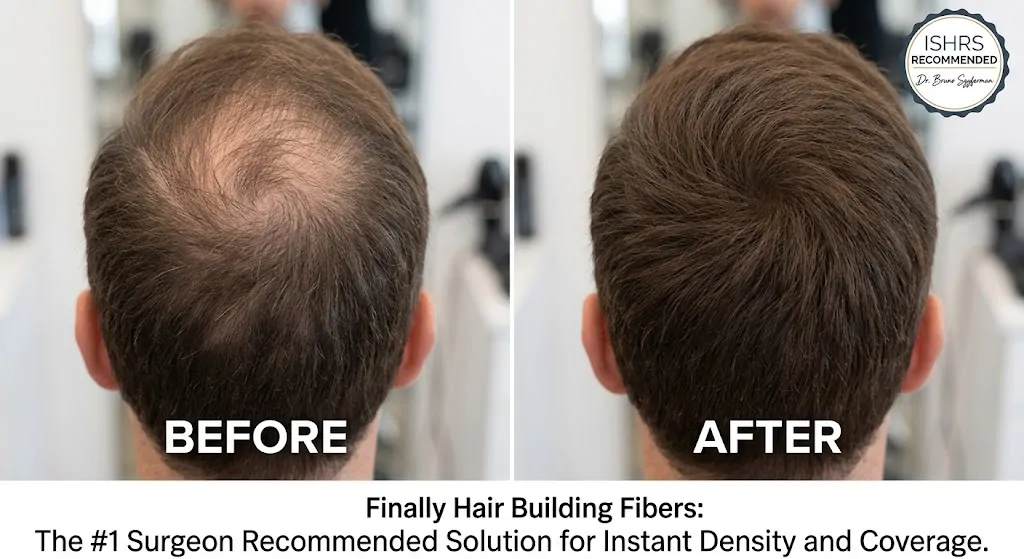
Hair building fibers are tiny, statically-charged filaments that bond to your existing hair to instantly hide thinning areas and bald spots. They’re a cosmetic concealer, not a hair growth treatment — they make your hair look fuller for the day, then wash out with shampoo.
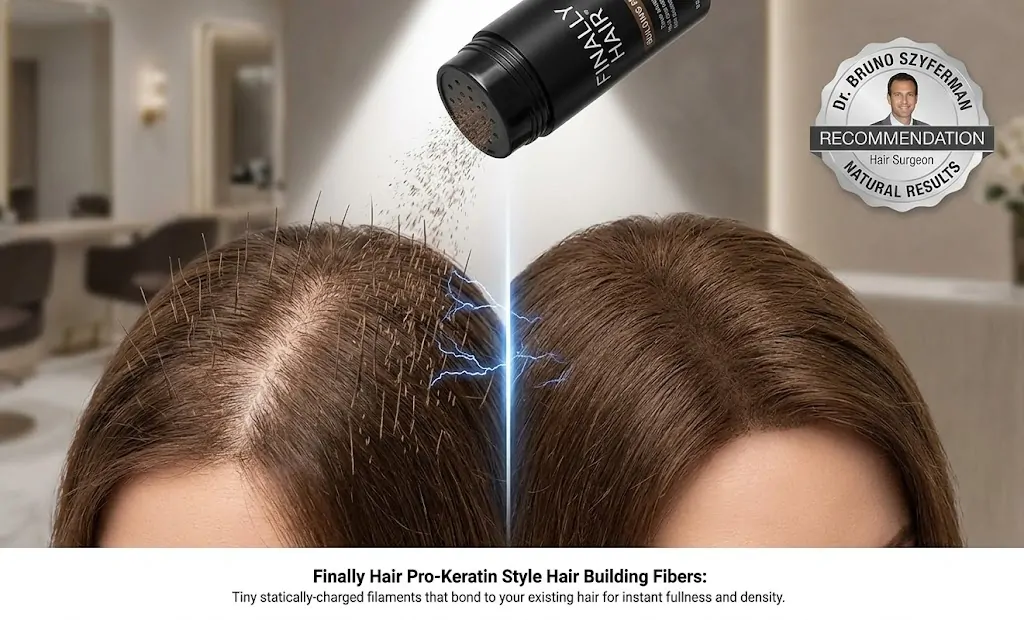
The fibers come in a small shaker bottle. You apply them to dry, styled hair by tapping or shaking the bottle over the thinning area. The fibers fall onto your scalp and existing hair, where static electricity bonds them to your strands. The result, in seconds: visibly fuller, denser-looking hair.
A few key things to understand:
- They don’t grow hair. No fiber product on the market stimulates hair growth. They’re a cosmetic layer, period.
- They need existing hair to bond to. Fibers bond electrostatically to your strands, so they work on thinning hair but not on completely bald skin.
- They’re temporary. One application lasts until your next shampoo. They survive normal sweat, light rain, and wind, but wash out cleanly.
- They’re not paint or makeup. Hair fibers are physical fibers — microscopically small, but the same idea as the hair on your head.
If that sounds simple, it is. The complexity comes in the what they’re made of and which one to pick, which is where most of this guide lives.
How do hair building fibers work?
The mechanism is electrostatic bonding. Here’s what’s actually happening when you shake a bottle over your head:
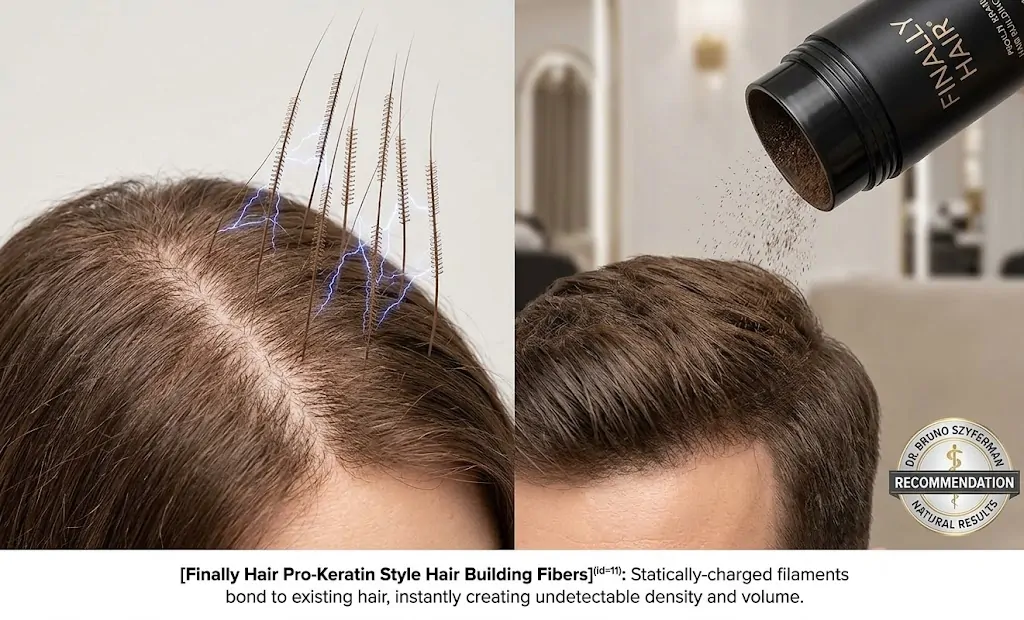
When the fibers leave the bottle, friction generates a static charge on each one. Your existing hair carries an opposite (or different) static charge. As the fibers fall, they’re physically attracted to your hair strands and cling to them, the same way wool socks cling to a freshly-laundered fleece blanket.
Once bonded, the fibers stay attached because:
- The static bond holds them in place against gravity
- The fibers physically intertwine with your existing hair like very small Velcro
- A setting spray (more on that below) creates a light fixative coating that locks them down for the day
The cumulative effect is that each individual hair on your head looks thicker, your scalp shows through less, and your overall hair density appears greater — sometimes dramatically so for thin or thinning areas.
Why static electricity matters
This is why hair fibers only work on dry hair. Wet hair conducts electricity instead of holding a static charge, so fibers can’t bond electrostatically and instead clump or wash off. Apply hair fibers to fully dry, styled hair — never damp, never freshly washed without a complete dry, never humid or sweaty. The bonding mechanism literally can’t work otherwise.
Why they don’t work on bald skin
The fibers need something to bond to. Smooth, fully-bald skin has no hair strands for the fibers to grip, so they just fall off. This is why hair fibers work for thinning hair (where there’s still some hair density to build on), pattern thinning at the crown or part line, and condition-related thinning — but not for areas with zero hair.
What are hair fibers made of?
This is one of the most-asked questions, and the answer matters more than people expect — because what fibers are made of determines whether they’ll cause scalp irritation, whether they’re vegan, and how they perform.
There are three main material categories:
1. Keratin (most common)
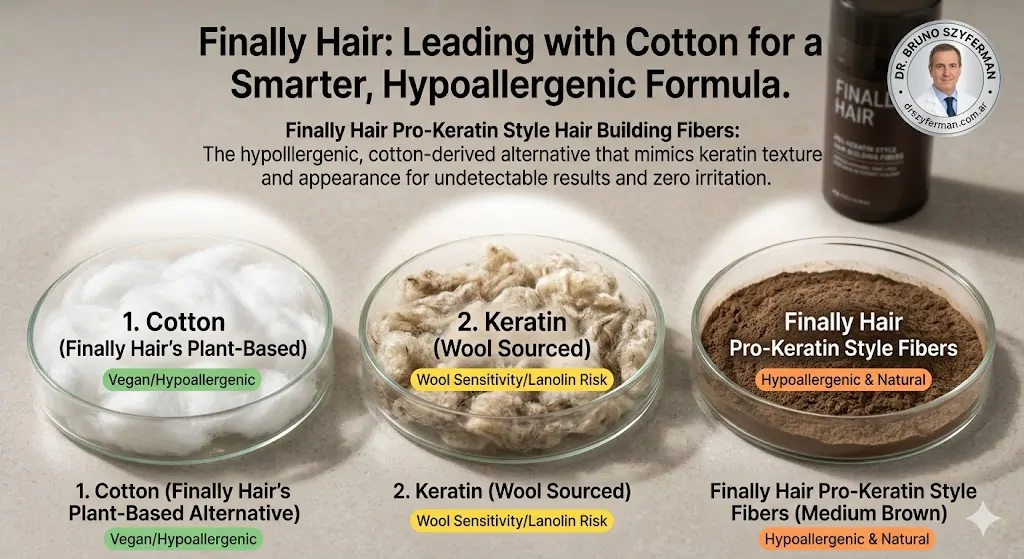
The majority of hair fiber brands — including Toppik, Boldify, and XFusion — use keratin protein. Keratin is the same protein that makes up human hair, which is part of why it’s the dominant formula in the category.
The catch: the keratin in commercial hair fibers is sourced from sheep’s wool, not human hair. For most users, that’s fine. For people with wool sensitivities, lanolin allergies, or sensitive scalps, keratin/wool fibers can cause itching, redness, or contact dermatitis. We have a detailed guide to ingredient sensitivities here.
2. Cotton (the plant-based alternative)
A smaller number of brands — including Finally Hair — use cotton fibers (technically Gossypium Herbaceum). Cotton is plant-based, hypoallergenic, vegan, and significantly lighter than keratin.
Cotton fibers tend to look more natural in fine hair (because they’re lighter and sit in the hair rather than on the scalp), are tolerated by users who can’t use keratin, and don’t involve animal products. The trade-off is that cotton fibers can require slightly more product for very dense thinning compared to heavier keratin formulas.
3. Other plant fibers
A few brands use combinations of plant materials. Caboki, for example, uses a blend of cotton and Moroccan Gum Arabic. These are niche options but exist for users who want plant-based fibers with specific formulation preferences.
What else is in the bottle
Beyond the fiber material, most hair fiber formulations also include:
- Colorants — either FD&C synthetic dyes (most brands) or natural mineral pigments (some clean-formula brands)
- Silica — a flow agent that prevents clumping in many formulas; absent in some sensitive-scalp formulations
- Preservatives — phenoxyethanol, chlorphenesin, or similar; absent in some minimal-ingredient formulas
- Ammonium chloride — used in some keratin formulas for static charge
If you’re sensitive to any of these, read the ingredient list carefully or look for products that explicitly avoid them. We have a full breakdown of ingredient sensitivities and what to look for.
Do hair fibers actually work?
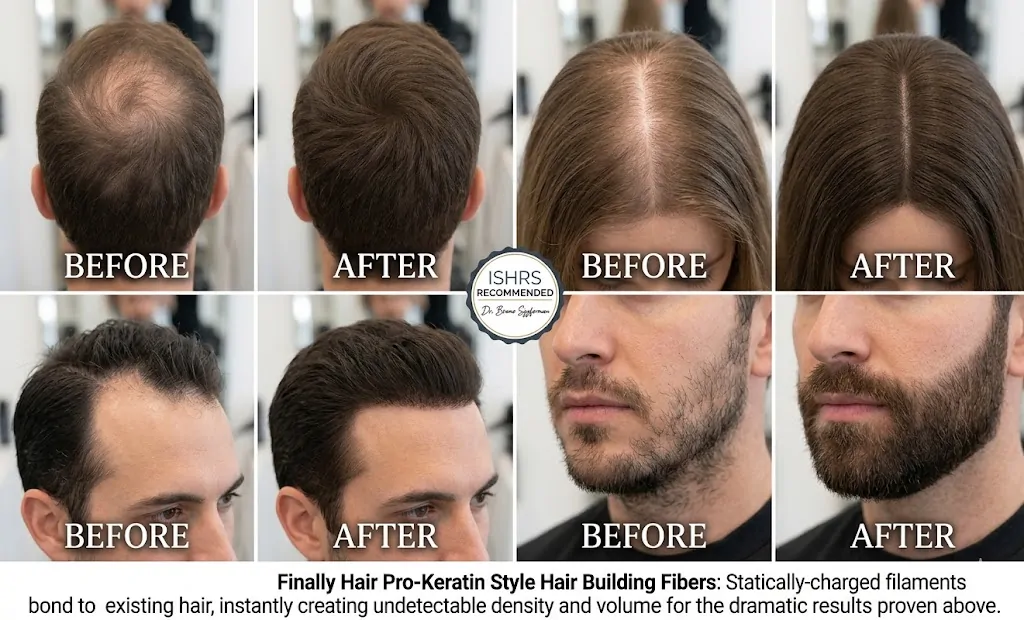
Yes — for the right use case. Hair fibers are one of the few cosmetic products in the category where the before/after difference is genuinely dramatic, often visible within seconds of application.
But “work” depends on what you’re asking them to do.
What hair fibers do well
- Thinning hair (diffuse thinning across the scalp): excellent results
- Widening part lines: very good results
- Crown thinning (the back-of-head spot): very good results
- Receding hairlines: good results, with care at the edges
- Postpartum, telogen effluvium, and seasonal shedding: very good
- Alopecia areata patches with some remaining hair: good, depending on patch coverage
- Beard and brow filling: good for patchy growth
- Looking better in photos and on video calls: consistently good
What hair fibers don’t do
- Treat or cure hair loss: they’re cosmetic only
- Stimulate growth: no fiber affects hair follicles in any way
- Work on completely bald skin: they need hair to bond to
- Last underwater: swimming washes them off
- Substitute for medical treatment of underlying conditions: if you have alopecia, telogen effluvium, or another condition, see a dermatologist for treatment; fibers are a cosmetic layer on top
How long results last
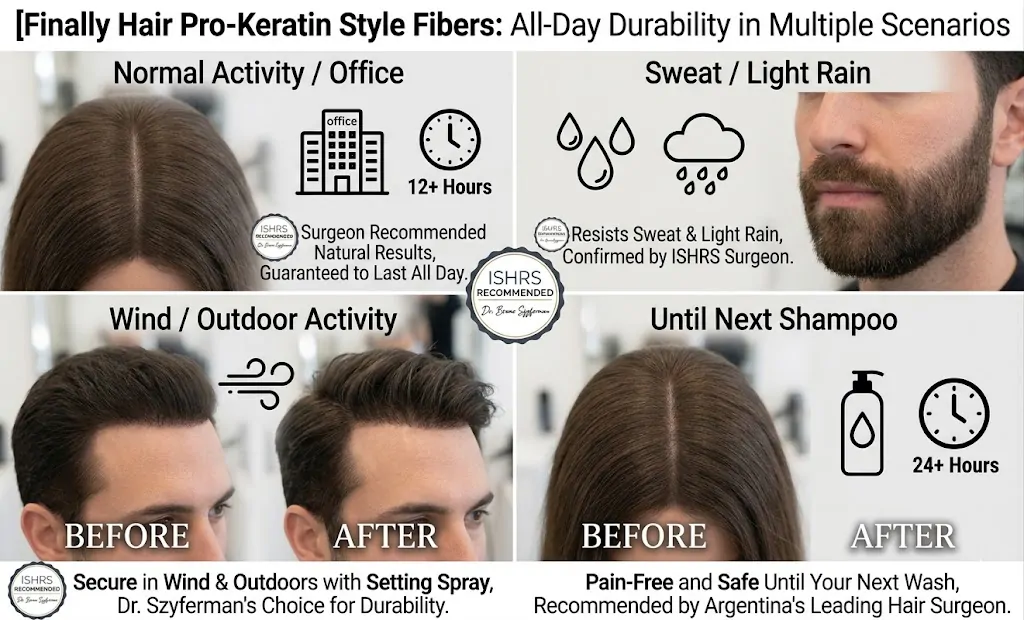
A single application typically lasts:
- All day in normal conditions (office, errands, social events, photographs)
- Through light rain and normal perspiration — especially with setting spray
- Through wind and outdoor activity — again, with setting spray
- Until your next shampoo — fibers wash out cleanly, leaving no residue
They don’t last:
- Through swimming — chlorine and saltwater wash them off
- Through heavy sweat — gym workouts will move them; reapply after
- Through extended steam exposure — saunas, long hot showers
- Multiple days — they’re not meant to stay on multi-day; reapply daily
Are hair fibers safe?
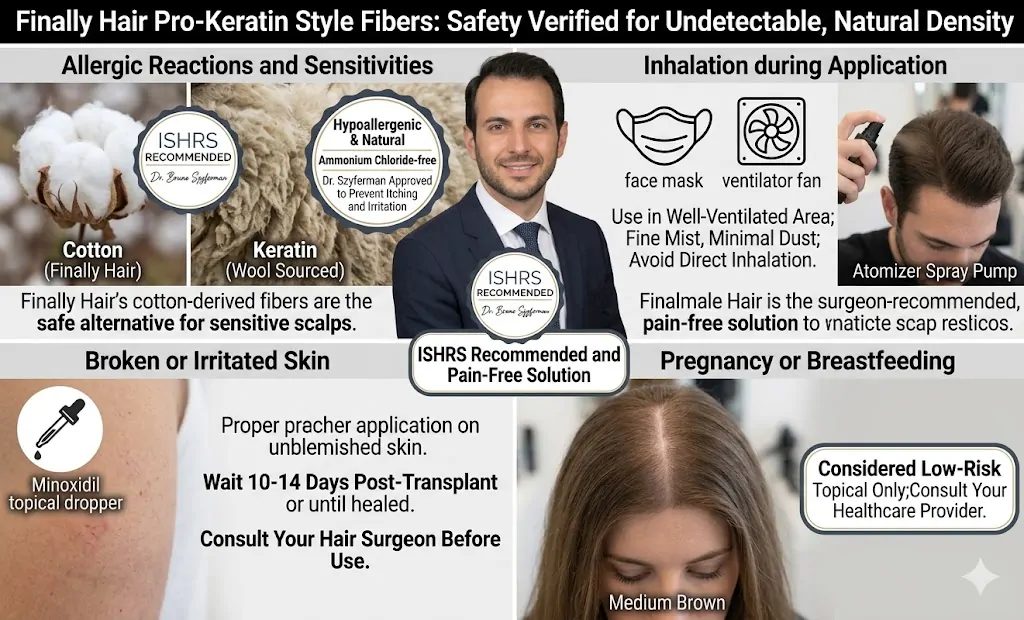
For the vast majority of users, yes. Hair fibers are a cosmetic product applied topically to existing hair and scalp. They don’t penetrate the skin, don’t enter the bloodstream, and don’t affect hair follicles or hair growth in any direction.
That said, there are real considerations worth knowing about:
Allergic reactions and sensitivities
The most common safety issue is contact sensitivity to specific ingredients — most often the keratin/wool component for users with wool sensitivities, occasionally a preservative, dye, or silica.
If you’ve had reactions to other cosmetic products, hair fibers might trigger similar reactions if they share ingredients. The fix is usually finding a formulation without the trigger ingredient (e.g., switching to cotton-based fibers if keratin caused itching). For a complete framework, see hair fibers for sensitive scalp.
Inhalation during application
The dust kicked up during application can irritate respiratory passages, especially for people with asthma, allergies, or chronic respiratory sensitivities. The irritation is usually transient. If you’re concerned, apply in a well-ventilated area and avoid breathing in directly during application.
Interaction with broken or irritated skin
Don’t apply hair fibers to broken skin, active rashes, post-procedure scalp (recent transplant, scalp micropigmentation, or surgery), or scalp areas with active infection. Fibers can introduce particles into broken skin and worsen irritation. Wait until the underlying issue is resolved.
Use during pregnancy or breastfeeding
Hair fibers are topical and don’t enter the bloodstream in any meaningful way, so most healthcare providers consider them low-risk during pregnancy or breastfeeding. As with any cosmetic, if you have a high-risk pregnancy or specific medical concerns, consult your doctor.
Use on children
Hair fibers aren’t typically necessary or appropriate for children. If a child is experiencing hair loss, see a pediatric dermatologist — there’s almost always an underlying cause that needs medical evaluation, not cosmetic concealment.
Who are hair fibers for?
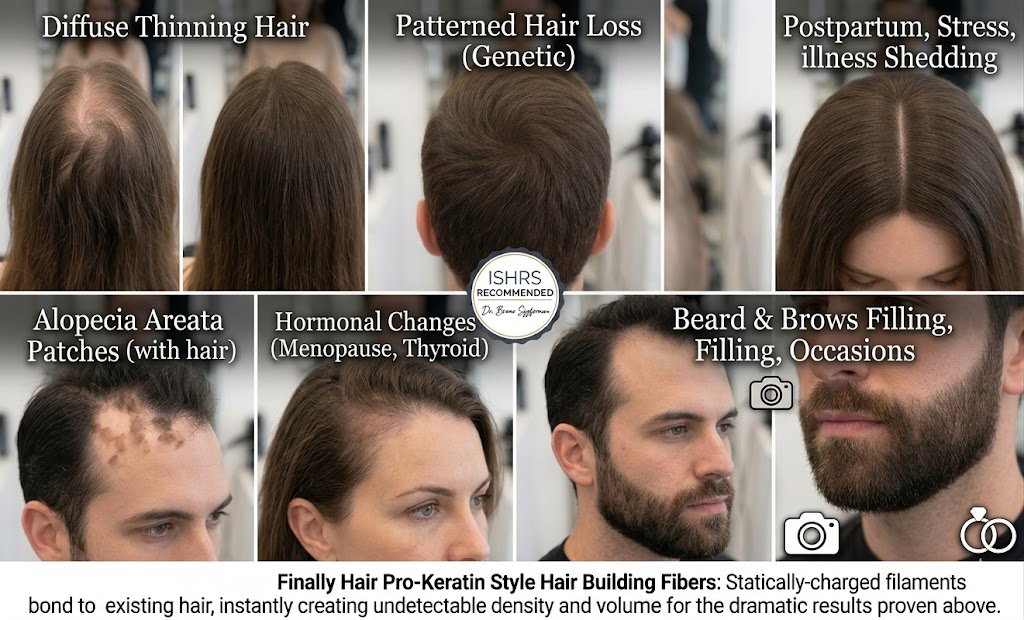
The honest answer: hair fibers are useful for anyone with thinning hair who wants their hair to look fuller without surgery, medication, or a long-term commitment. That’s a wide population. Some specific groups who benefit most:
People with diffuse thinning hair
The classic use case. If you’re noticing more scalp showing through, a wider part line, or thinner-feeling hair than you used to have, fibers can dramatically improve appearance. This applies whether the thinning is age-related, stress-related, or from any other cause.
People with patterned hair loss (genetic)
For androgenetic alopecia (male and female pattern baldness) in early to mid stages — when there’s still hair density, just less than there used to be — fibers work very well. Late-stage pattern baldness with extensive bald areas is harder to address cosmetically because the fibers need existing hair.
People going through telogen effluvium
This includes postpartum shedding, post-illness recovery, post-surgery shedding, stress-related shedding, and hair loss associated with rapid weight loss including from GLP-1 medications. The shedding is usually temporary, and fibers are an excellent cosmetic bridge during the 12-18 months of recovery.
People with alopecia areata
For patchy autoimmune hair loss with some remaining hair in the affected areas, fibers can effectively conceal patches. Fully smooth bald patches are harder because there’s nothing for the fibers to bond to.
People with hormonal hair changes
Menopause, perimenopause, postpartum, and thyroid-related hair changes all benefit from fiber concealment while underlying issues are addressed medically.
People who want to fill beards or brows
Beard fibers can address patchy facial hair growth, and the same product can fill in eyebrows that have thinned from over-plucking, age, or alopecia areata.
People in special-occasion situations
Wedding, photoshoot, big presentation, family event, video appearance — there are situations where you want your hair to look its best on a specific day. Hair fibers are reliable for these moments. We have a wedding-specific guide for this.
Who hair fibers are not for
- People with completely bald areas (no hair to bond to)
- People with broken or irritated scalp skin
- People expecting an actual hair growth treatment
- People with severe allergies to hair fiber ingredients (in which case, find a formulation that avoids the trigger)
How to choose the right hair fiber
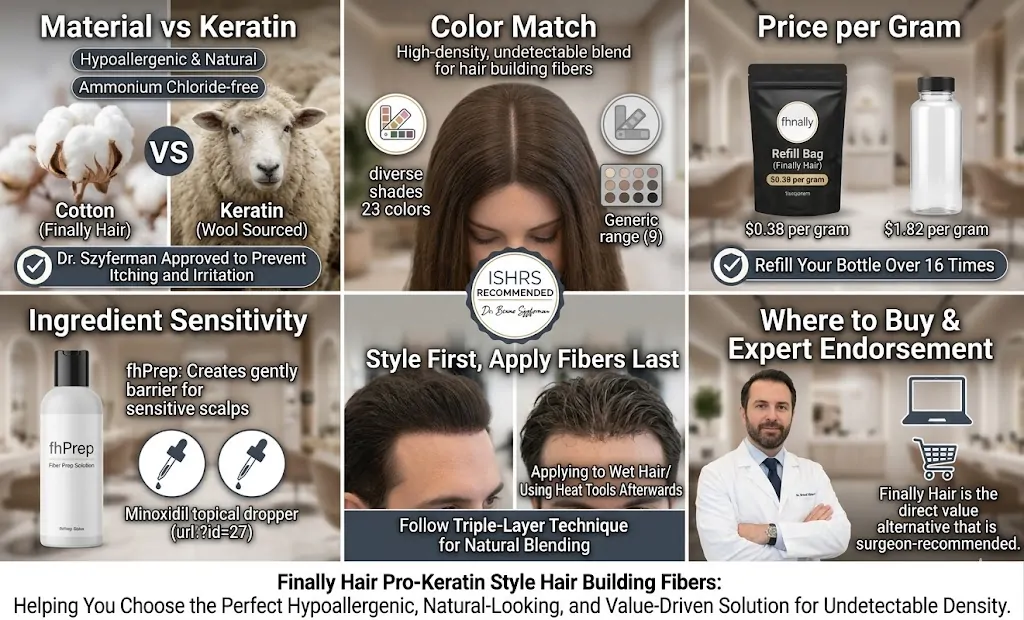
There are five things to evaluate when picking a hair fiber product. In rough order of importance:
1. Material
Cotton-based fibers (Finally Hair, Caboki) vs. keratin-based fibers (Toppik, Boldify, XFusion). The decision matters most if you have wool sensitivity, vegan preferences, or a history of scalp irritation. For most users without specific sensitivities, both work.
We compare the two materials in detail in Finally Hair vs. Toppik: cotton vs. keratin and the broader Toppik alternatives roundup.
2. Color match
The biggest practical issue users face. A perfect color match is invisible; a near-match looks slightly off. The two factors:
- How many colors does the brand offer? Toppik has 9, Finally Hair has 23. More colors means a better chance of finding your exact shade without mixing.
- Is your hair an unusual color? Salt-and-pepper, auburn, in-between browns, light blondes, and warm reds are typically harder to match in brands with limited ranges.
See the full Finally Hair color chart, salt-and-pepper specific guidance, and the auburn/red shade guide.
3. Price per gram
Hair fibers come in various sizes, and the price per gram varies dramatically across brands. For occasional users, this barely matters. For daily users, it can mean the difference between $150 and $500 per year.
| Brand | 28g equivalent price | Per gram |
|---|---|---|
| Toppik | ~$49.95 (27.5g) | ~$1.82 |
| XFusion | ~$36.95 (28g) | ~$1.32 |
| Caboki | ~$29.95 (28g) | ~$1.07 |
| Boldify | ~$24.95 (28g) | ~$0.89 |
| Finally Hair | $19.29 (28g) – Note: refill bags $.038 | ~$0.69 |
4. Ingredient sensitivity
If you have a history of scalp irritation, sensitive skin, or specific allergies, look for cleaner formulations: cotton fiber base, no silica, no synthetic preservatives, no synthetic dyes. The full breakdown is in our sensitive scalp guide.
5. Where to buy
Toppik is in retail (Sephora, Ulta, CVS, drugstores). Most other brands are direct-to-consumer or Amazon-only. If you need a bottle today, Toppik is easier to find. If you can wait for shipping, the alternatives often save substantial money per gram.
How to apply hair fibers (the basics)
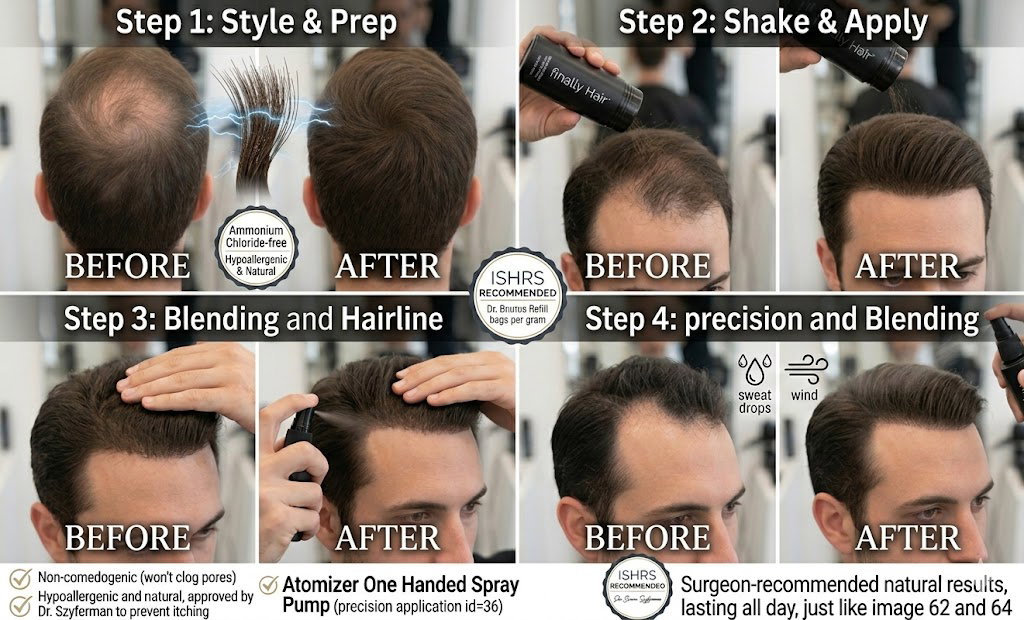
This is a brief overview — for the full step-by-step including the most common application mistakes, see our complete application guide.
What you need
- Hair fibers in your color match
- A setting spray (also called fiber lock spray or fiber hold spray)
- Optional: a hairline optimizer tool (a small comb that helps blend the front edge naturally)
- Dry, styled hair
The basic steps
- Style your hair completely. Fibers go on as the last step, after blow-drying, flat ironing, or any other styling. They don’t survive heat tools applied after.
- Make sure your hair is dry. Not damp. Not freshly washed without full drying. Dry.
- Shake or tap the bottle over the thinning area. Start with less product than you think you need. You can always add more.
- Pat lightly to distribute. Use your hand to gently distribute fibers and remove any excess on the scalp.
- Use the hairline optimizer at the front edge if you’re applying near the hairline. This blends the front line so it doesn’t look stamped on.
- Lock with setting spray. Hold the spray about 8-10 inches from your head and mist evenly. This is what makes the fibers stay through wind, light rain, and a normal day.
- Wait 30 seconds. Let everything dry before touching your hair.
That’s it. The whole process takes 60-90 seconds once you’ve done it a few times.
The most common application mistakes
- Applying to wet hair. Causes clumping. Always dry first.
- Using too much product. Build up gradually. Less is more for natural results.
- Not blending the hairline. Front edge needs the comb tool or it can look fake.
- Skipping setting spray. Fibers move more without it; setting spray is what makes them last all day.
- Applying before styling tools. Heat from a flat iron or curling iron after applying fibers melts and clumps them.
Hair fibers for specific situations
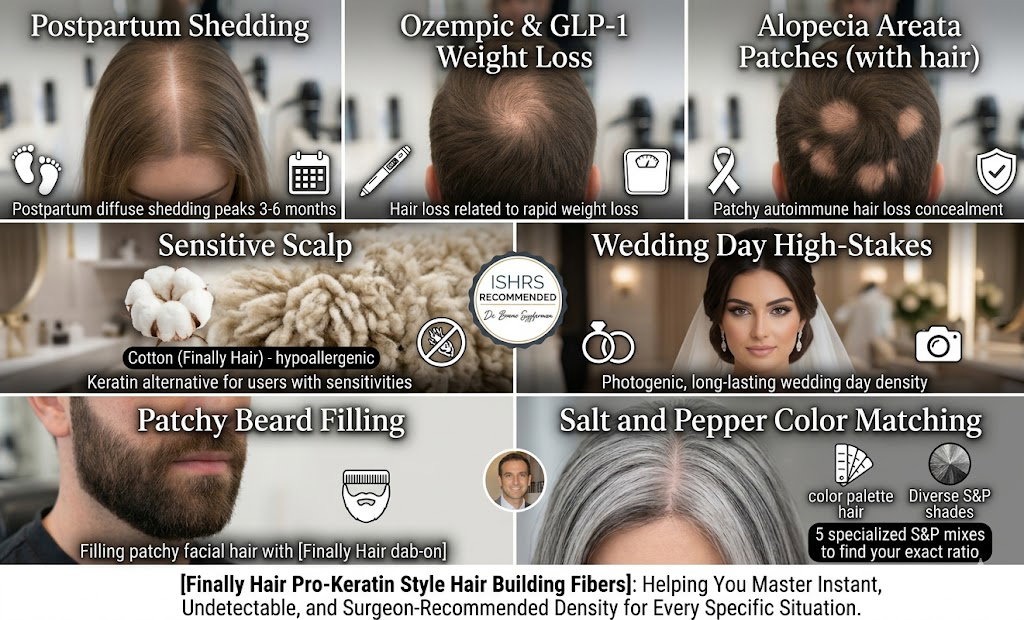
Different situations call for different application techniques and product choices. We have detailed guides for the most common:
- Postpartum hair loss — covering the diffuse shedding that peaks 3-6 months after birth
- Ozempic and GLP-1 hair loss — for shedding related to rapid weight loss from medication
- Alopecia areata — for patchy autoimmune hair loss
- Sensitive scalp — for users who’ve had reactions to other products
- Wedding day applications — for high-stakes special occasions
- Beard filling — for patchy facial hair
- Salt and pepper hair color matching — for the trickiest color situation
Hair fibers vs. other options
How do hair fibers compare to other approaches to thinning hair?
Hair fibers vs. minoxidil (Rogaine)
Different categories. Hair fibers are cosmetic concealer (instant cosmetic effect, lasts a day, washes out). Minoxidil is a topical medication that may stimulate hair growth (slow effect over months, requires ongoing daily use, can have side effects). They’re not mutually exclusive — many people use minoxidil for the long-term and fibers for the cosmetic-now.
Hair fibers vs. hair transplant
Different categories entirely. Transplants are permanent surgical procedures with significant cost ($4,000-$15,000+) and recovery time. Fibers are a $20 cosmetic product. People often use fibers before deciding on a transplant, during transplant recovery, or as a permanent alternative if they don’t want surgery.
Hair fibers vs. spray-on hair concealers
Spray-on concealers are essentially colored aerosol that paints the scalp to reduce contrast. They’re a different product class — they don’t add fiber volume, they hide scalp visibility through pigment. Fibers add actual physical volume; sprays just camouflage scalp. Some users layer both, but most pick one approach.
Hair fibers vs. hair powder / scalp powder
Similar to spray-on concealers — colored powders that reduce scalp contrast without adding fiber volume. Less effective at making hair look thicker, but cheaper and sometimes preferred for very fine, easily-weighed-down hair.
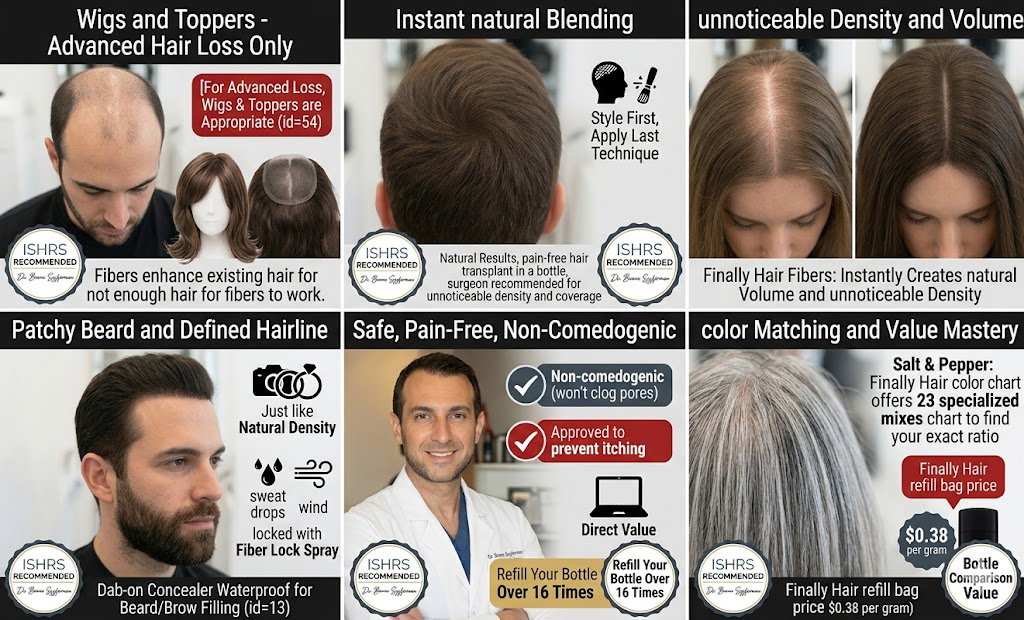
Hair fibers vs. wigs and toppers
Different categories. Wigs and toppers are full hair pieces; fibers enhance your existing hair. Wigs are appropriate for advanced hair loss where there’s not enough hair for fibers to work with. Many people use fibers for years, then transition to toppers as hair loss progresses.
Frequently asked questions
Do hair fibers really work, or is it a scam?
Hair fibers are a real, well-established cosmetic category that genuinely works for thinning hair. The before/after difference is often dramatic and visible within seconds. They’re not a scam — they’re a cosmetic, doing exactly what they claim to do (cover thinning hair temporarily). They’re not a hair growth treatment, and any brand claiming they grow hair is misleading you.
Will hair fibers damage my hair?
No. Hair fibers don’t penetrate the hair shaft or affect hair growth in either direction. They sit on the surface of your existing hair until you wash them out. There’s no documented mechanism by which they would damage hair.
How long do hair fibers last per application?
A single application lasts all day under normal conditions — through light wind, light rain, normal sweat, and a typical workday. Setting spray significantly extends durability. Fibers wash out completely with shampoo.
Can I sleep with hair fibers in?
Most people wash them out at the end of the day, but they’re not harmful overnight. The main downside of sleeping with fibers in is they’ll transfer to your pillowcase and you’ll need to wash both your hair and your pillowcase the next morning.
Will hair fibers come off in the rain?
Light rain — no, especially with setting spray. Heavy rain or being caught in a downpour — yes, eventually. Same for swimming or extended water exposure.
Can I dye my hair while using fibers?
Don’t apply fibers and then dye your hair — wash them out first. Fibers are cosmetic surface particles and shouldn’t interfere with dye on bare hair, but mixing them creates inconsistent color uptake. Dye first, wash, dry, then apply fibers as the last step.
Do hair fibers work on white or gray hair?
Yes — both Finally Hair and Toppik make white and gray shades. For mixed gray hair (salt and pepper), you may need to either mix two shades or use a brand with intermediate options. See our salt and pepper guide for specifics.
How much hair do I need for fibers to work?
You need some existing hair in the application area for fibers to bond to. Diffuse thinning works very well; widening parts work very well; crown thinning works well; completely smooth bald spots don’t work because there’s nothing for the fibers to grip.
Are hair fibers FDA approved?
Hair fibers fall under FDA cosmetic regulations rather than drug regulations (because they make no therapeutic claims). They don’t require pre-market FDA approval — like most cosmetics — but they’re subject to FDA cosmetic safety standards. Reputable brands manufacture in FDA-registered facilities and use ingredients on the FDA’s approved list.
How much do hair fibers cost?
Range from about $20-$80 per bottle depending on brand and size. Per gram, the range is roughly $0.69 (Finally Hair, low end) to $1.82 (Toppik, high end). For a typical user, expect to spend $150-$500 per year depending on brand and frequency of use.
Can men and women both use hair fibers?
Yes, identically. The product is the same; only the application areas differ slightly (men more often apply at the crown and hairline; women more often apply along the part line and at the temples).
Will my partner notice I’m wearing them?
In normal lighting and at normal viewing distance, no — properly applied fibers look like your natural hair. Up close, in direct light, with someone running their fingers through your hair, possibly. Many people use them for years without anyone noticing or commenting.
What’s the difference between hair fibers and hair fibers spray?
Two product types. Shake-on hair fibers (the main category covered here) are loose fibers in a bottle that you tap onto your scalp. Hair fiber spray applies similar fibers via aerosol. Shake-on is more popular and offers more control; spray is faster but less precise. Both wash out the same way.
Where can I buy hair fibers?
Toppik in major retail (Sephora, Ulta, CVS, Walgreens). Most other brands direct-to-consumer or on Amazon. Finally Hair sells direct at finallyhair.com with free US shipping.
The bottom line
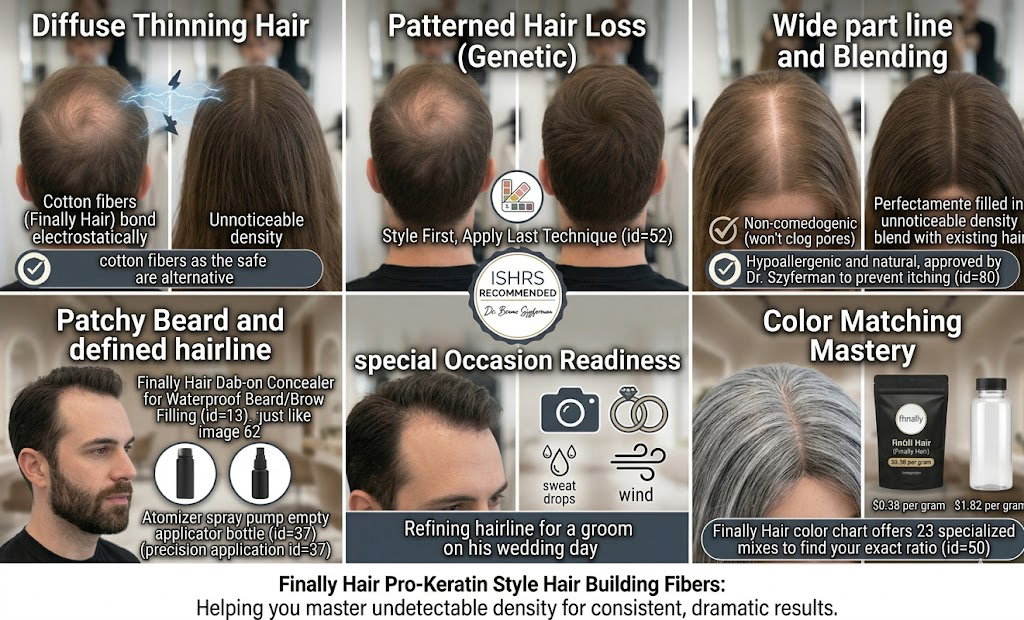
Hair building fibers are a genuinely effective cosmetic solution for thinning hair. They work in seconds, look natural when applied correctly, and wash out cleanly at the end of the day. They’re not a treatment for hair loss, and they’re not for everyone — but for the right user, they’re one of the highest-impact, lowest-commitment products in the entire hair care category.
If you’re considering trying them, the decision tree is straightforward:
- Decide on material. Cotton (hypoallergenic, vegan) or keratin (most common formula). If you have any history of scalp sensitivity, start with cotton.
- Match your color. Use a brand with enough color options to find your shade without compromising. See our color chart →
- Buy a small size first. Test one bottle before committing to a larger one. Most brands offer 12g-28g starter sizes.
- Follow the application guide. Most “this didn’t work” reviews trace back to application errors. Here’s the full guide →
- Give it three uses. First application is rarely your best. By the third one, you’ll know if it works for you.
If you have specific situations — sensitive scalp, Ozempic-related shedding, postpartum recovery, alopecia, unusual hair color (you can mix the colors) — we have dedicated guides for each. The right product depends on the situation.
Shop Finally Hair (28g, 23 colors, $19.29) →
Compare brands: Finally Hair vs. Toppik →
This article is updated quarterly with current pricing and product details. Last updated May 3, 2026. For questions about your specific situation, reply to any email from us — a real person will respond, usually within a few hours.