
Clinical Concealment: Why Hair Surgeons Recommend Keratin-Style Fibers Post-Transplant
In the world of hair restoration, the period immediately following a hair transplant is often the most challenging for a patient. While the promise of new growth is on the horizon, the reality of post-operative redness, scabbing, and temporary “shock loss” can be socially taxing.
To bridge this gap, leading surgeons are increasingly turning to medical-grade cosmetic concealers. We sat down with Dr. Bruno Szyferman, an acclaimed hair transplant surgeon and member of the ISHRS, to discuss why Finally Hair fibers have become a clinical staple in his post-operative protocol.

The Interview: A Clinical Perspective on Cosmetic Concealment
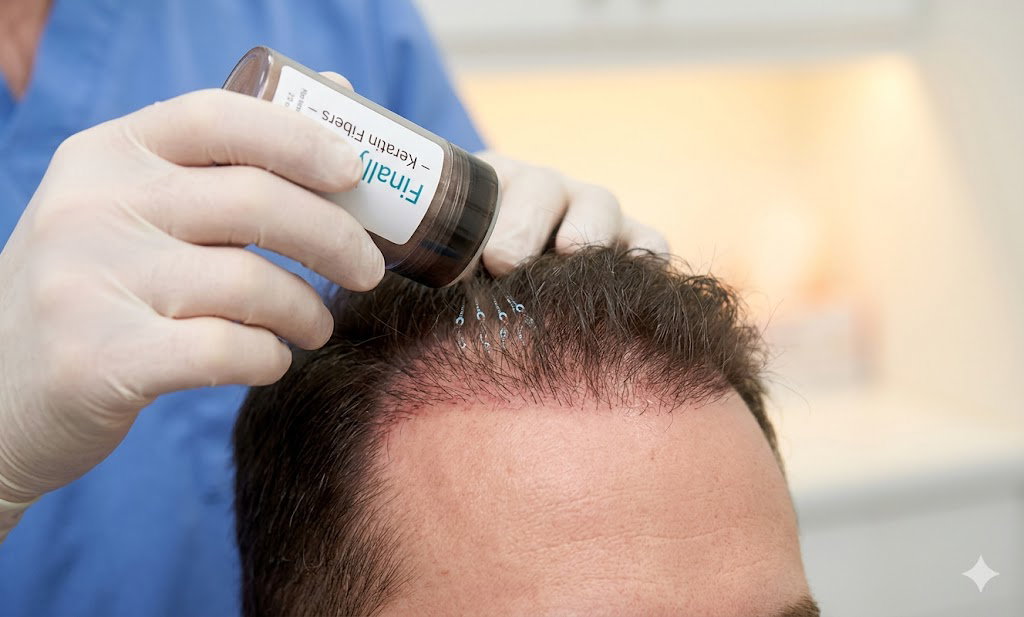
Finally Hair: Dr. Szyferman, many patients are hesitant to put anything on their scalp after a transplant. Why do you specifically recommend keratin-style fibers?
Dr. Bruno Szyferman: The primary concern after a transplant is the health of the newly implanted follicles. We need a solution that provides density without compromising the scalp’s recovery. I recommend Finally Hair because their fibers are non-comedogenic. This is a technical way of saying they do not clog the pores or the follicular units. This breathability is essential for the healing dermis.
Finally Hair: What makes these fibers stay in place on a scalp that might have very little hair density?
Dr. Szyferman: It comes down to electrostatic bonding. High-quality pro-keratin fibers carry a natural negative charge, while human hair carries a positive charge. They literally magnetize to the hair shaft. Even in cases of advanced thinning or post-op shock loss, these fibers cling to the existing “vellus” hairs to create a foundational layer of density that looks completely natural.
Finally Hair: How do you address concerns regarding irritation or “the itch factor”?
Dr. Szyferman: This is where dermatological standards become critical. Many mass-market fibers use synthetic dyes or preservatives like ammonium chloride which can trigger contact dermatitis. Finally Hair fibers are hypoallergenic. By removing these irritants, we provide a “Clinical Concealment” that hides the redness of a healing scalp without causing an inflammatory response that could jeopardize the grafts.
⚡ Key Takeaways: The Medical Advantage
-
Non-Comedogenic: Does not block pores, allowing for natural hair growth cycles to continue.
-
Electrostatic Bonding: Ensures a secure, 24-hour hold even on thin, post-operative hair.
-
Dermatologist Approved: Hypoallergenic formulas prevent the inflammation that leads to “the itch.”
-
Instant Recovery: Effectively hides post-transplant “shock loss” and surgical redness.
The Post-Op Protocol
For patients recovering from a transplant or managing advanced thinning, Dr. Szyferman recommends a gentle, synergistic routine:
-
Cleanse: Use a Gentle Moroccan Argan Shampoo to maintain a clean scalp environment.
-
Conceal: Apply Finally Hair Building Fibers once the surgeon confirms the grafts are secure (usually 10-14 days post-op).
-
Lock: Use the Fiber Lock Spray to ensure the fibers remain smudge-proof throughout the day.