
Learning how to use fibers in hair can instantly restore your confidence if you are struggling with thinning sections or visible scalp lines. Fortunately, you do not have to resort to invasive surgeries or messy, painted-on sprays to get your confidence back. Modern cosmetic technology offers a flawless, instant solution: cosmetic fibers.
In this comprehensive guide, we will break down exactly how fibers in hair work, how to apply them for a completely natural look, and why choosing the right formula matters for your long-term scalp health.
Key Takeaways: Quick Guide Summary
-
The Science: Premium hair fibers utilize natural static electricity to cling vertically to your existing hair strands, instantly creating a thicker appearance.
-
The Formula: Avoid animal-wool keratin formulas that cause severe scalp itching and redness. Opt for 100% vegan, hypoallergenic ingredients instead.
-
Application Secret: Always dry and style your hair before applying cosmetic fibers. Finish with a dedicated fiber-locking spray to protect your look against wind and light rain.
-
Sustainability Rules: Don’t waste money throwing away plastic containers. Utilize eco-friendly refill bags to top off your applicator bottle and save up to 70% on your restoration costs.
What Are Hair Building Fibers?
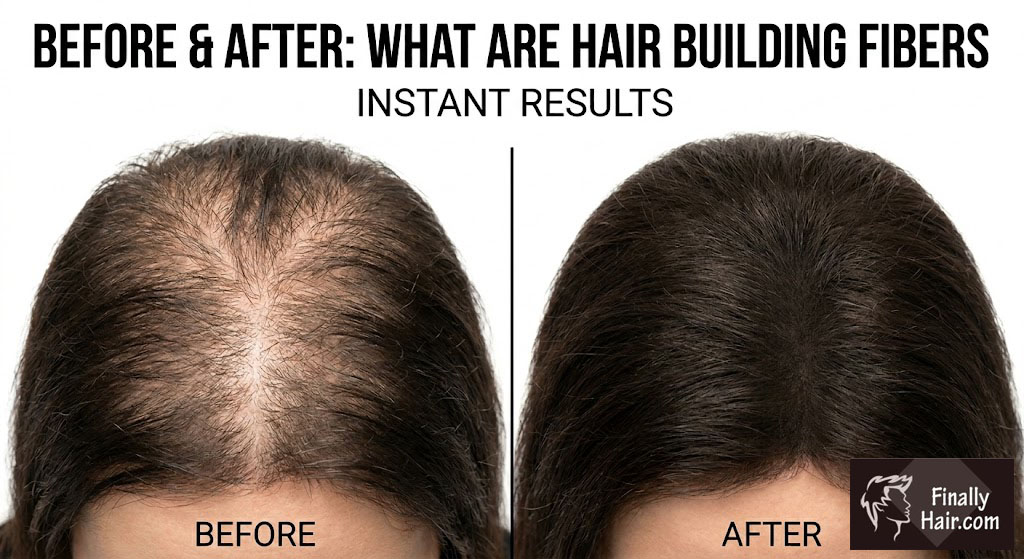
Hair building fibers are professional-grade cosmetic filaments designed to completely conceal the appearance of thinning sections, wide hair parts, and localized bald spots.
Unlike older generation hair powders that sit flat on the skin and look unnatural, high-quality fibers integrate directly with your existing hair strands. They act like thousands of microscopic extensions, instantly building real-looking density and fullness exactly where you need it most.
The Science: How Do Fibers in Hair Work?
The secret behind premium hair fibers lies in a simple law of physics: static electricity.
When you apply Finally Hair building fibers to your target areas, the filaments carry a natural electrostatic charge. This charge allows them to instantly cling to your existing hair shafts—even the finest, hard-to-see “peach fuzz” hairs.
Instead of falling flat onto your scalp, the fibers bind vertically to your hair. This structural bonding makes every individual hair strand appear significantly thicker. To ensure your new look lasts all day, a quick mist of Fiber Lock Spray secures the bond, shielding your style against wind, light rain, and daily sweat.
Why Choose Finally Hair Over Keratin Competitors?
Not all products on the market deliver the same quality or comfort. Many major brand competitors manufacture their fibers using keratin derived from processed animal wool. For many users, animal byproduct formulas trigger severe scalp irritation, redness, and the dreaded “wool itch.”
Finally Hair changed the game by pioneering a 100% Vegan, Pro-Health formula. Here is what sets our technology apart:
-
23 Lifelike Shades: We proudly offer the largest color selection in the hair restoration industry. This includes specialized, hard-to-find Salt & Pepper and multi-tonal Grey blends.
-
Anti-Clumping Technology: Lower-grade powders often clump together when exposed to moisture, creating a heavy, unnatural look. We engineer our fibers to disperse perfectly evenly for an invisible finish.
-
Eco-Friendly Savings: We are the only brand dedicated to sustainability. Once you own a standard Applicator Bottle, you can save up to 70% on future orders by using our eco-friendly Refill Bags.
Are Cosmetic Hair Fibers Safe for Daily Use?
Absolutely. Top hair transplant surgeons regularly recommend our clean formula because it is completely free from dangerous preservatives like Silica and Ammonium Chloride.
Because our fibers rest safely on the hair shaft rather than sinking into your skin, they will never clog your pores or restrict your hair follicles. This makes them perfectly safe to use alongside your daily hair loss treatments, including topical Minoxidil or nourishing Rosemary Serums.
Frequently Asked Questions About Fibers in Hair
1. How long do fibers stay in hair?
Fibers will stay securely in your hair until your next shampoo. They bond tightly to your natural strands via a static charge and easily withstand routine touching, sleeping, and daily activities. For maximum hold, lock them in with a styling spray.
2. Can you use hair fibers daily?
Yes, high-quality hair fibers are completely safe for daily application. Formulas like Finally Hair contain no harsh chemicals, meaning they will not clog your pores, irritate your scalp, or interfere with your hair’s natural growth cycle.
3. Do hair fibers stand up to rain and sweat?
When paired with a dedicated fiber-locking spray, cosmetic hair fibers become highly resistant to wind, light rain, and perspiration. They will not run, streak, or stain your clothes during a workout or a damp day.
4. Will fibers block or hurt hair growth treatments?
Not at all. Because the filaments bind vertically to the hair shaft rather than settling deep into the skin, you can safely use them alongside daily hair loss treatments like Minoxidil or topical growth serums.
5. What are the best fibers in hair for sensitive scalps?
Vegan and cotton-based fibers are best for sensitive scalps. Many big-brand competitors use keratin derived from animal wool, which frequently triggers severe scalp irritation, redness, and itching. Finally Hair uses a 100% vegan, pro-health formula to prevent these issues.
6. How do fibers in hair actually work?
The technology relies on static electricity. The microscopic fibers carry a natural electrostatic charge that allows them to instantly cling to your existing hair shafts. This structural bonding makes every individual hair strand appear significantly thicker.
7. Can you use hair fibers on a completely bald spot?
Fibers require some existing hair strands to cling to, even fine “peach fuzz.” If an area is completely slick and bald with zero hair follicles, the fibers will not have an anchor point and may look like a powder on the skin rather than real hair.
8. Will hair building fibers cause hair loss?
No. High-quality hair fibers do not cause hair loss or accelerate thinning. They are non-comedogenic, meaning they rest on the hair shaft and do not clog the hair follicles or restrict natural hair growth.
9. Can you go to sleep with fibers in hair?
Yes, you can sleep with fibers in your hair. While a small amount of residual powder might transfer onto your pillowcase if you toss and turn, a quick morning touch-up is usually all that is needed. Using a silk or satin pillowcase reduces friction and minimizes transfer.
10. How do you choose the right color for hair fibers?
For the most natural look, always match the fiber color to the shade of your hair roots, not the tips. If you are between two shades, choose the darker one for a more natural depth, or mix two colors together to create a custom blend.
11. Do hair fibers work on gray or salt and pepper hair?
Yes. However, cheap brands often lack multi-tonal options. Finally Hair offers 23 lifelike shades, including specialized, hard-to-find Salt & Pepper and multi-tonal Grey blends to ensure an invisible match for aging hair.
12. How do you apply fibers to the hairline without looking messy?
When applying fibers near your forehead, use a hair fiber hairline optimizer or a simple card to block the spray. This prevents the fibers from falling onto your face and creates a clean, natural-looking, soft hairline.
13. Can you use styling gel or pomade with hair fibers?
Yes, but timing is critical. Apply your wet styling products (like gels, pomades, or oils) first and let them dry completely. Once your hair is dry and styled, apply the cosmetic fibers to fill in the thinning areas.
14. Do hair fibers look natural in direct sunlight?
Premium fibers look completely natural in direct sunlight because they match the light-reflective properties of real hair. Lower-grade powders often look dull, reflective, or green under bright light, which exposes the concealment.
15. Can you brush your hair after applying fibers?
It is best to style, brush, and comb your hair before applying the fibers. If you must comb your hair afterward, use a wide-tooth comb or your fingers very gently so you do not disrupt the static bond.
16. How do you remove hair fibers completely?
Hair fibers wash out effortlessly with standard shampoo and warm water. They do not require special clarifying shampoos or harsh scrubbing to remove from your hair and scalp.
17. Are hair building fibers noticeable to other people?
When applied correctly and color-matched properly, high-quality hair fibers are completely invisible to the naked eye, even from only a few inches away. They blend seamlessly with your natural hair texture.
18. Can you use a hair dryer after putting fibers in hair?
You should use your hair dryer to completely dry and volumize your hair before applying fibers. Blowing high-velocity air onto the hair after application will scatter the fibers before they have a chance to lock in.
19. What happens if hair fibers get wet in a downpour?
While fibers resist light rain and sweat when paired with a locking spray, a heavy downpour or swimming will wash them out. If you get caught in a severe storm, the fibers may clump or run.
20. Can women use hair building fibers?
Absolutely. Hair fibers are highly popular among women to conceal widening parts, thinning crowns, postpartum hair loss, and alopecia traction along the hairline.
21. How many applications do you get out of one bottle?
This depends heavily on the size of the thinning area you are covering. On average, a standard 15-gram to 30-gram bottle will last anywhere from 30 to 60 days of daily use.
22. Are there eco-friendly options for hair fibers?
Most brands force you to buy a brand-new plastic bottle every time. Finally Hair supports sustainability by offering eco-friendly refill bags. Once you own an applicator bottle, you can refill it yourself and save up to 70% on your costs.
23. Can you use hair straighteners or curling irons with fibers?
Always perform all thermal styling—including flat irons, curling irons, and crimpers—before applying your hair fibers. Applying extreme heat directly onto the fibers can damage the synthetic or natural filaments.
24. Do hair fibers stain clothes or pillowcases?
No. Hair fibers are a dry powder and do not contain dyes that bleed. If any fibers fall onto your clothes or pillows, they can be easily brushed away with your hand or washed out cleanly in a standard laundry cycle.
25. What is the difference between keratin and cotton hair fibers?
Keratin fibers are often made from animal wool and can cause allergic reactions or scalp itchiness. High-quality alternative fibers use plant-based extracts or organic cotton, which are hypoallergenic, lighter, and safer for long-term scalp health.
26. Can you use hair fibers after a hair transplant?
Many hair transplant surgeons recommend cosmetic fibers to cover up thinning zones during the “ugly duckling” shedding phase post-surgery. However, always wait until your incisions are completely healed (usually 14 days) and consult your doctor first.
27. Do hair fibers work on short hair or buzz cuts?
Yes, fibers work excellent on short hair, including buzz cuts, as long as there are short stubbles of hair for the static charge to bind to. They are great for sharpening a fade or clean hairline.
28. What is a fiber spray applicator and do I need one?
An applicator nozzle replaces the standard “salt-shaker” top on your bottle. It uses air pressure to target specific thin spots precisely, ensuring a much more even distribution and saving you product.
29. Can you mix different hair fiber colors together?
Yes! Mixing colors is a great trick for highlighted, multi-tonal, or graying hair. Simply shake a little of each color into your applicator bottle to achieve a perfect, custom-blended match.
30. Why do my hair fibers look clumpy or unnatural?
Clumping usually happens if your hair is still damp during application or if you apply too much product to a single area. To prevent clumps, ensure your hair is 100% dry, apply the fibers in light layers, and tap the bottle gently.